Recognizing the Signs of an Abusive Relationship
An abusive relationship is one where one person uses power and control to dominate another. Understanding the signs can be life-saving.
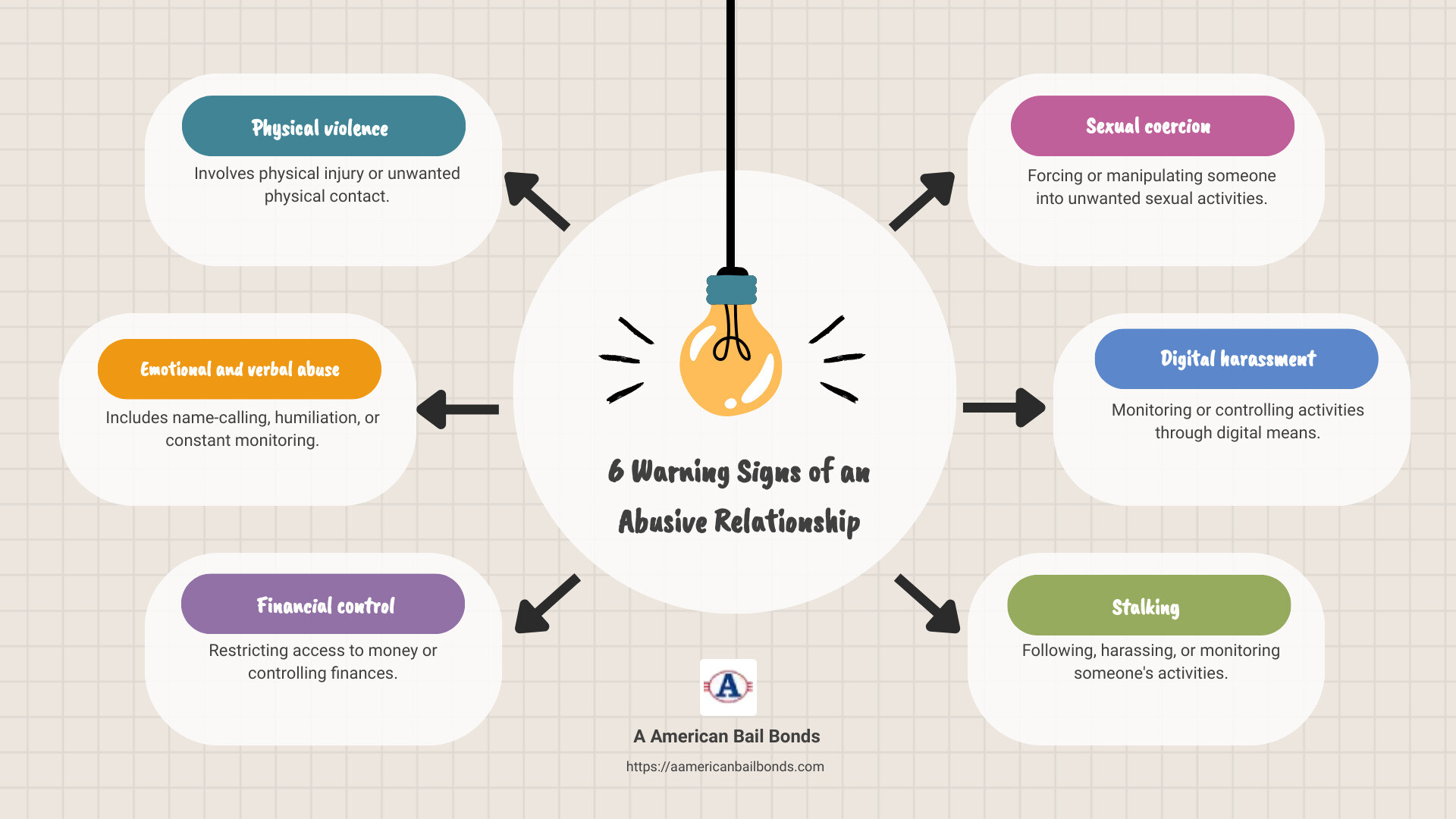
Here are six warning signs of an abusive relationship:
- Physical violence
- Emotional and verbal abuse
- Financial control
- Sexual coercion
- Digital harassment
- Stalking
I’m Luke Ireland. With over 22 years in law enforcement, I’ve seen the devastation caused by abusive relationships. Let me guide you through understanding and recognizing the warning signs so you can seek help and stay safe.
Recognizing and Addressing Physical Abuse
Examples of Physical Abuse
Physical abuse is any intentional, unwanted contact that causes or intends to cause injury. It’s not just about physical violence; it also includes behaviors that make you feel unsafe or threatened.
Examples of Physical Abuse:
- Scratching: Leaving marks or causing bleeding.
- Punching and Kicking: Hitting with fists or feet.
- Biting: Causing pain and potential infections.
- Strangling and Choking: Cutting off air supply.
- Throwing Items: Tossing objects like phones, books, or plates at you.
- Pulling Hair: Yanking your hair to cause pain or control you.
- Threatening with Weapons: Using or threatening to use guns, knives, or other dangerous items.
- Forced Sexual Acts: Coercing you into sex or sexual activities without your consent.

Physical abuse can have severe consequences, even if it doesn’t leave visible marks. It’s crucial to recognize these behaviors early and seek help.
If you’ve experienced any of these forms of abuse, know that you’re not alone. According to the CDC, more than 1 in 10 high school students have experienced physical aggression from a dating partner.
What to do if you’ve experienced physical abuse:
- Talk to a trusted friend or family member: Sharing your experience can provide emotional support and help you plan your next steps.
- Create a safety plan: This involves deciding where you can go and what you need to take if you need to leave quickly.
- Obtain a restraining order: Legal protection can prevent your abuser from contacting or coming near you.
- Contact love is respect: They offer support and resources to help you create a safety plan and find local resources.
Abusive relationships often escalate. Assess your partner’s use of force to determine the urgency of your situation and seek the appropriate support.
Next, we’ll explore emotional and verbal abuse, which can be just as harmful as physical abuse.
2. Emotional and Verbal Abuse
Emotional and verbal abuse can be just as harmful as physical abuse. It involves behaviors that manipulate, insult, and control you, often without leaving visible scars.
Signs of Emotional and Verbal Abuse
Emotional Manipulation: This is when your partner uses your emotions to control you. They might make you feel guilty for spending time with friends or family. They could also twist your words or actions to make you doubt your own feelings.
Verbal Insults: Constant name-calling, yelling, or making hurtful comments are signs of verbal abuse. Your partner might call you “stupid,” “worthless,” or other degrading names. This can seriously damage your self-esteem.
Constant Monitoring: Your partner might insist on knowing where you are at all times. They may excessively text or call you, demanding updates on your whereabouts and who you’re with. This behavior is controlling and invasive.
Isolation: Abusers often try to isolate you from friends and family. They may say things like, “They don’t really care about you,” or “You don’t need anyone but me.” This can make you feel alone and dependent on your partner.
Humiliation: Public or private humiliation is a common tactic. Your partner might make fun of you in front of others, or belittle your achievements and feelings. This can make you feel small and insignificant.
Name-Calling: Using derogatory names to address or describe you is a clear sign of verbal abuse. This behavior is meant to demean and control you.
Yelling: Frequent yelling and screaming are forms of verbal abuse. It’s used to intimidate and exert power over you.
Embarrassing in Public: Your partner might share personal information or make jokes at your expense in public settings. This is meant to embarrass and control you by making you feel ashamed.
Preventing Communication: An abuser might prevent you from talking to friends, family, or even coworkers. They might take your phone, monitor your messages, or forbid you from using social media.
Damaging Property: Breaking your belongings, tearing up photos, or damaging your personal items are ways to intimidate and control you. This behavior shows a lack of respect for you and your property.
Jealousy: Extreme jealousy is another form of emotional abuse. Your partner might accuse you of cheating or flirting without any basis. This can make you feel guilty and constantly on edge.
Gaslighting: This is when your partner makes you question your own reality. They might deny things they’ve said or done, making you feel confused and doubting your own memory. Gaslighting is a powerful form of emotional manipulation.
Next, we’ll discuss financial abuse, which often goes hand-in-hand with other forms of abuse.
3. Financial Abuse
Financial abuse is a form of control where one partner manipulates the other through money. This type of abuse can be subtle but very damaging. Here are some ways it can manifest:
Examples of Financial Abuse
Allowance Control: The abuser gives the victim a limited allowance and monitors every purchase. Over time, this allowance may be reduced, making it hard to buy basic necessities like food and medicine.
Paycheck Access: The abuser deposits the victim’s paycheck into an account that the victim cannot access. This keeps the victim dependent and unable to save money for themselves.
Hiding Financial Information: The abuser keeps the victim in the dark about their financial situation. They may hide bank statements, bills, or other financial records, making it impossible for the victim to know their financial status.
Preventing Work: The abuser may forbid the victim from working or limit their working hours. They might take away the victim’s car keys or sabotage their job by harassing them at work or causing them to miss important meetings.
Stealing Financial Aid: The abuser might steal financial aid checks or other forms of financial support meant for the victim. This can include using the victim’s or their child’s social security number to obtain loans or tax refunds without permission.
Maxing Out Credit Cards: The abuser may max out the victim’s credit cards without their consent. This can ruin the victim’s credit score and make it hard for them to get loans or other financial products in the future.
Economic Exploitation: This involves the abuser intentionally destroying the victim’s financial resources. They might open lines of credit in the victim’s name, refuse to pay bills, or gamble away joint savings. This leaves the victim in a financially vulnerable position.
Employment Interference: The abuser may actively sabotage the victim’s employment. This can include harassing the victim at work, physically abusing them before important meetings, or preventing them from attending job interviews.
These tactics strip away the victim’s economic self-sufficiency and make it hard for them to leave the abusive relationship. Financial abuse often goes hand-in-hand with emotional or physical abuse, creating a complex web of control.
Next, we’ll discuss sexual abuse, another form of control that can be devastating.
4. Sexual Abuse
Sexual abuse is a form of control where the abuser uses sex to dominate their partner. It can be subtle or violent, but it always involves violating someone’s boundaries. Here are some signs of sexual abuse to watch for:
Coercion
Coercion happens when someone pressures or forces you to engage in sexual activities. This might include begging, threats, or guilt-tripping. For example, saying things like, “If you loved me, you would do this,” or threatening to leave if you refuse.
Unwanted Sexual Activity
This includes any sexual contact that you didn’t agree to. It might be unwanted touching, kissing, or more serious acts. Even if you’re in a relationship, you have the right to say no.
Reproductive Control
An abuser might try to control your reproductive choices. This can include refusing to use condoms, hiding your birth control, or forcing you to get pregnant or have an abortion. This type of control can have long-lasting effects on your health and freedom.
Sexual Insults
Using sexual insults to demean you is another form of abuse. This might include calling you names, making fun of your body, or criticizing your sexual performance. These insults are meant to hurt your self-esteem and make you feel worthless.
Refusing Protection
Refusing to use protection during sex, like condoms, or preventing you from using birth control, is a serious sign of abuse. This puts you at risk for sexually transmitted infections (STIs) and unwanted pregnancies.
Sexual Activity Under Influence
Having sex with someone who is drunk, high, unconscious, or otherwise unable to give clear consent is abuse. Consent must be given freely and clearly, without any form of impairment.
Threats for Sex
Using threats to force someone into sexual activity is a clear sign of abuse. This might include threatening to hurt you, your loved ones, or even themselves if you don’t comply.
Sexual Pressure
Constantly pressuring someone for sex, even after they’ve said no, is abusive. This can make the victim feel like they have no choice but to comply to avoid further conflict or harm.
Sexual abuse is never the victim’s fault. Recognizing these signs can help you understand if you’re in an abusive relationship and take steps to protect yourself.
Next, we’ll discuss digital abuse, a modern form of control that can be just as damaging.
5. Digital Abuse
Digital abuse is a modern form of control that can be just as damaging as physical or emotional abuse. It involves using technology to bully, harass, stalk, or intimidate a partner. Here are some examples to help you recognize it:
Examples of Digital Abuse
Online Harassment
This includes sending negative, insulting, or threatening messages or emails. It’s a way to make you feel bad about yourself and can be very harmful to your mental health.
Social Media Control
An abuser might tell you who you can or can’t follow or be friends with on social media. They might use your social media accounts to monitor your activities and even post humiliating or unflattering photos or videos of you.
Constant Texting
If your partner constantly texts you and makes you feel like you can’t be separated from your phone, that’s a form of digital abuse. It can make you feel trapped and anxious.
Using technology to track your activities can be very invasive. This could include using spyware or GPS in your car or phone to monitor where you go.
Negative Messages
Sending you negative or insulting messages can lower your self-esteem and make you feel worthless. This is a common tactic in digital abuse.
Tracking Activities
An abuser might use social media or other digital means to keep tabs on what you’re doing and who you’re with. This can make you feel like you have no privacy.
Humiliating Posts
Posting humiliating or unflattering photos or videos of you online is another form of digital abuse. It’s meant to embarrass and control you.
Password Theft
Stealing or pressuring you to share your account passwords is a serious invasion of your privacy. It allows the abuser to control your online presence and activities.
Constant Check-Ins
If your partner constantly checks in on you digitally, it can make you feel like you have no freedom. This might include frequent texts or calls to know where you are and who you’re with.
Spyware Use
Installing spyware on your devices to monitor your activities is a severe form of digital abuse. It can track everything you do online and is a major violation of your privacy.
Recognizing these signs can help you understand if you’re experiencing digital abuse. Next, we’ll discuss stalking, another form of harassment that can have a significant impact on your life.
6. Stalking
Signs of Stalking
Stalking involves repeated harassment that makes you feel afraid or unsafe. Stalkers can be past partners, acquaintances, or even strangers. Here are some clear signs of stalking:
Repeated Harassment
Stalkers often harass their victims through unwanted texts, messages, emails, or voicemails. These communications can be constant and intrusive, making you feel overwhelmed.
Following
A stalker may follow you or show up uninvited at your home, workplace, or places you frequently visit. This behavior is meant to intimidate and control.
Unwanted Gifts
Receiving unwanted items, gifts, or flowers can also be a sign of stalking. These gestures might seem harmless but are often used to manipulate or control.
Social Media Tracking
Stalkers use social media to track your activities. They might monitor your posts, check-ins, or even use someone else’s account to look at your profile.
Stalkers often show up unannounced at places you spend time. This could be your home, workplace, or even social gatherings, making you feel unsafe.
Unwanted Messages
Receiving unwanted messages, whether through texts, social media, or emails, is a common tactic used by stalkers. These messages can be threatening or just persistent, making you feel uneasy.
Spreading Rumors
Stalkers might spread false rumors about you online or in person. This can damage your reputation and make you feel isolated.
Damaging Property
Stalkers may damage your property, such as your home, car, or personal belongings. This act of vandalism is meant to intimidate and control you.
Hiring Private Investigators
In extreme cases, stalkers might hire private investigators to follow you and gather information about your whereabouts and activities.
Recognizing these signs can help you understand if you’re experiencing stalking. If you feel you are being stalked, it’s crucial to take steps to protect yourself and seek help immediately.
Frequently Asked Questions about Abusive Relationships
What are the 5 cycles of emotional abuse?
Emotional abuse often follows a predictable pattern. Here are the five cycles:
Rage
The abuser explodes in anger, often over something minor. This can include yelling, name-calling, and making threats. The goal is to intimidate and control you.
Enmeshment
After the rage, the abuser may try to make you feel overly dependent on them. They might act loving and caring, but it’s a tactic to keep you close and under their control.
Rejection/Abandonment
At this stage, the abuser may withdraw affection or attention, making you feel isolated and unloved. This rejection is designed to make you feel worthless and desperate for their approval.
Complete Neglect
The abuser completely ignores you, refusing to acknowledge your needs or feelings. This can make you feel invisible and unimportant, further lowering your self-esteem.
Extreme Overprotection
Finally, the abuser may become overly protective, monitoring your every move and isolating you from friends and family. This overprotection is another form of control, disguised as concern for your well-being.
What defines someone as abusive?
An abusive person uses various tactics to control and harm you. These can include:
Physical Actions
Hitting, slapping, kicking, or using weapons to inflict harm.
Sexual Actions
Forcing you into unwanted sexual activities or controlling your reproductive choices.
Emotional Actions
Insulting, humiliating, or gaslighting you to make you doubt your reality.
Economic Actions
Controlling your finances, preventing you from working, or stealing your money.
Psychological Actions
Using threats, intimidation, and manipulation to instill fear and maintain control.
How can I get help if I am in an abusive relationship?
If you find yourself in an abusive relationship, it’s crucial to seek help immediately. Here are some steps you can take:
Contact Hotlines
Reach out to national or local hotlines for immediate support. For example, in the U.S., you can call the National Domestic Violence Hotline at 1-800-799-7233.
Local Resources
Look for domestic violence shelters or support groups in your area. These organizations can provide temporary housing, counseling, and legal assistance.
Trusted Friends and Family
Confide in people you trust. They can offer emotional support and may help you find resources to escape the abuse.
Legal Professionals
Consult with a lawyer to understand your legal rights and options. They can help you obtain restraining orders and steer the legal system.
Taking these steps can help you break free from an abusive relationship and start the journey toward healing and safety.
Conclusion
Recognizing abuse in a relationship is crucial. Abuse can take many forms—physical, emotional, financial, sexual, digital, and stalking. By identifying the signs early, you can take steps to protect yourself and your loved ones.
Seeking Help
If you suspect you are in an abusive relationship, seek help immediately. Contact hotlines, local shelters, or support groups. These resources can provide temporary housing, counseling, and legal assistance. Confide in trusted friends and family who can offer emotional support and help you find resources to escape the abuse.
A American Bail Bonds
At A American Bail Bonds, we understand the complexities and dangers of abusive relationships. We offer domestic violence bail bonds to help you or your loved ones steer the legal system. Our team is here to support you through this challenging time.
Local Resources
Use local resources such as domestic violence shelters and hotlines. These organizations can offer temporary shelter, counseling services, and legal support.
Safety Planning
Creating a safety plan is essential. This includes finding a safe place to go, gathering essential documents, and stashing away cash if possible. A well-thought-out plan can make the difference between staying trapped and finding freedom.
You are not alone. Many have faced similar challenges and found their way to safety and healing. Recognize the signs, seek help, and take action to protect yourself and your loved ones.
By understanding the importance of recognizing abuse and seeking help, you can take the first steps toward a safer, healthier life. Reach out to A American Bail Bonds for support and guidance through the legal process. Your safety is our priority.