Understanding Bail Bonds for DUI & DWI
When you hear terms like bail bonds for dui & dwi, you probably feel a mix of confusion and anxiety. Understanding how bail bonds work for these offenses can protect your rights and help you get back to your daily life quickly. Here’s a quick summary:
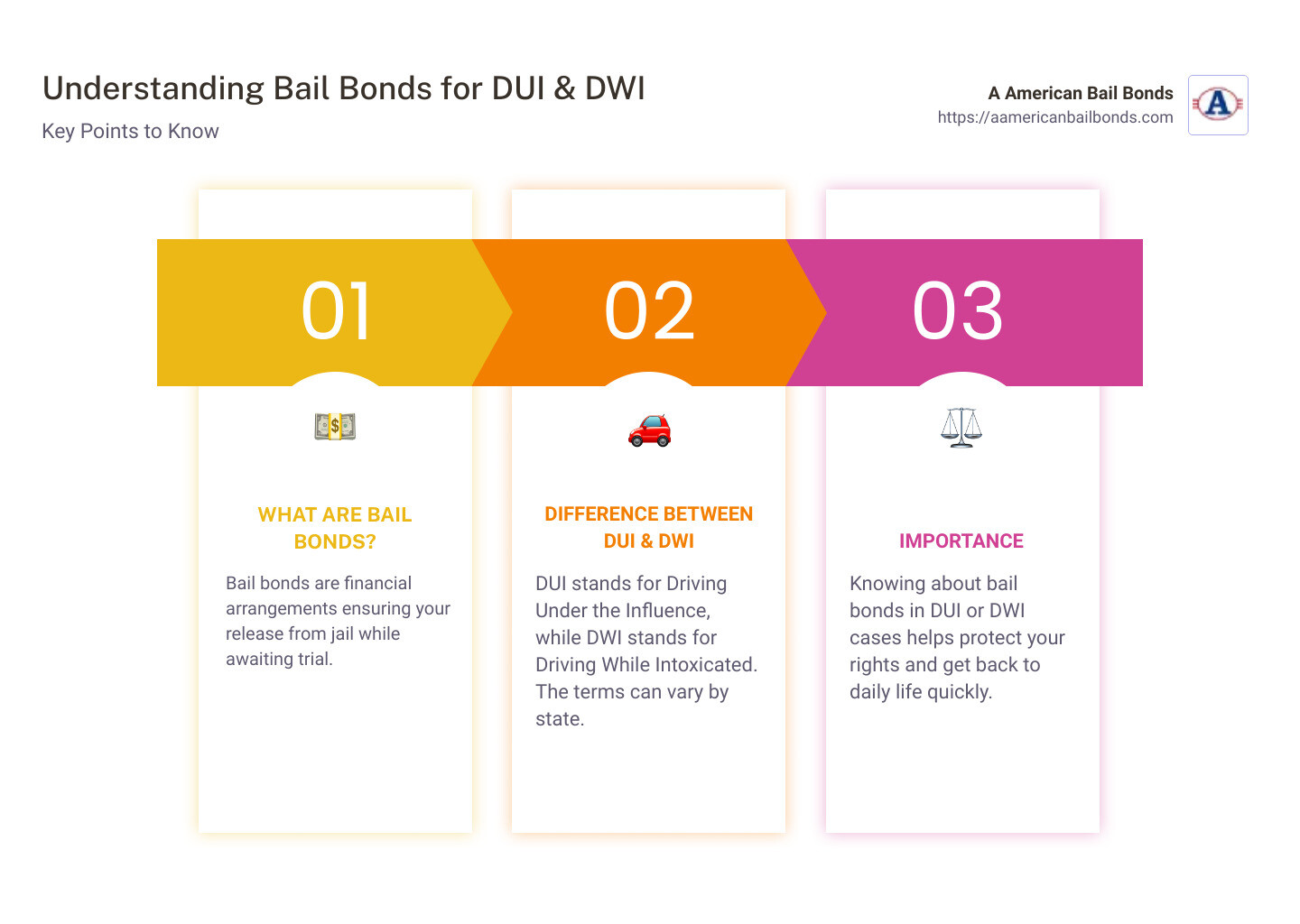
- Bail Bonds: Financial arrangements ensuring your release from jail while awaiting trial.
- DUI: Driving Under the Influence—operating a vehicle impaired by alcohol or drugs.
- DWI: Driving While Intoxicated—often used interchangeably with DUI but can vary by state.
Understanding bail bonds in DUI or DWI cases is crucial because these terms dictate your ability to continue your daily routine, like going to work and caring for your family, while you await your court date.
My name is Luke Ireland, a former law enforcement officer with extensive knowledge of the court system and bail bonds for DUI & DWI cases. I will guide you through the basics, ensuring you are well-informed and prepared.
What Are Bail Bonds for DUI & DWI?
When you’re arrested for a DUI (Driving Under the Influence) or DWI (Driving While Intoxicated), the court might allow you to stay out of jail until your trial. To ensure you show up for court, they set certain conditions called “bail.” Bail bonds are financial instruments that help you meet these conditions. Let’s dive into the different types of bail bonds and how they work.
Types of Bail Bonds
Signature Bonds
A signature bond, also known as being released on your own recognizance (OR), means you don’t have to pay any money upfront. Instead, you sign a promise to appear in court. This is common if it’s your first offense and you’re not considered a flight risk.
Unsecured Bonds
With an unsecured bond, you don’t pay anything initially. However, you sign an agreement that you will pay a specific amount if you fail to appear in court. This type of bond is less common but is still an option in some cases.
Secured Bonds
Secured bonds require you to pay money or provide property as collateral. You have two options:
– Pay the full amount yourself: If you attend all court appearances, you’ll get your money back.
– Use a bail bondsman: A bail bondsman pays the court on your behalf, but you pay a nonrefundable fee (usually 10% of the bail amount). If you don’t show up in court, the bondsman can take legal action to recover the money.
Factors Influencing Bail Amounts
When it comes to setting bail for DUI and DWI cases, several factors come into play. These factors help the court decide how much bail should be set to ensure you appear for your court dates and keep the community safe.
Criminal History
Your past criminal record heavily influences your bail amount. If you’ve had previous DUI or DWI convictions, the court will likely set a higher bail. A clean record might result in a lower bail, while a history of repeated offenses suggests a higher risk, thus higher bail.
Flight Risk
Judges consider whether you’re likely to flee before your trial. Factors like owning a passport, having family or business ties in other states or countries, and past failures to appear in court can signal a higher flight risk. If deemed a flight risk, expect a higher bail amount.
Danger to Self or Others
The court also assesses whether you pose a danger to yourself or the community. If your DUI involved an accident, injuries, or reckless behavior, the bail amount could be significantly higher. The more severe the potential harm, the higher the bail.
Unique Circumstances
Each DUI case is unique, and specific circumstances can influence bail amounts. Factors such as the presence of minors in the vehicle, extremely high blood alcohol content (BAC), or previous failures to comply with court orders can all play a role.
State-Specific Bail Amounts
Bail amounts can vary widely from state to state. Here’s a quick look at some state-specific examples:
Texas
In Texas, a first-time DUI offender might see bail set between $1,000 and $5,000. Repeat offenders or cases involving accidents can see much higher amounts.
Minnesota
Minnesota has a similar range, with first-time offenses often seeing bail amounts from $1,000 to $3,000. Severe cases or repeat offenses can push this higher.
Illinois
Illinois recently implemented the Pretrial Fairness Act, which eliminates cash bail for most offenses. However, for serious DUI charges, the court can still detain you if deemed a flight risk or danger to the community.
Florida
Florida courts use a bail schedule for DUI offenses, typically ranging from $500 to $5,000. However, factors like prior offenses or accidents can increase this amount significantly.
Virginia
In Virginia, bail for a misdemeanor DUI can range between $500 and $10,000, while felony DUI charges can see bail set as high as $50,000, depending on your criminal history and the specifics of the case.
Understanding these factors and state-specific differences can help you anticipate what to expect if you’re facing DUI or DWI charges. Next, we’ll dig into the costs associated with DUI and DWI bail bonds.
Costs Associated with DUI & DWI Bail Bonds
When you’re dealing with a DUI or DWI arrest, understanding the costs involved is crucial. Knowing what to expect can help you manage your finances and make informed decisions.
Bail Amounts
The amount you’ll need to post for bail can vary widely. For instance, in Virginia, misdemeanor DUI bail ranges from $500 to $10,000. Felony DUI charges can push the bail up to $50,000. These amounts depend on your criminal history and the specific circumstances of your case.
Bondsman Fees
Most people don’t have thousands of dollars readily available, which is where a bail bondsman comes in. Typically, a bail bondsman charges a non-refundable fee of 10% of the total bail amount. For example, if your bail is set at $10,000, you would pay the bondsman $1,000. This fee is standard and regulated by the state.
Cash vs. Property
You have options when it comes to posting bail.
Cash Bail: Paying the full amount in cash is straightforward. If your bail is set at $5,000, you pay $5,000 to the court. This money is refunded after you attend all required court appearances, minus any administrative fees.
Property Bonds: In some cases, you can use property as collateral. This involves placing a lien on your property equal to the bail amount. If you fail to appear in court, you risk losing your property.
Refund Conditions
If you pay your bail amount in cash and attend all court dates, the court will refund your money. However, if you use a bail bondsman, the 10% fee is non-refundable even if you comply with all court requirements.
Fines and Legal Fees
A DUI can be very expensive. Fines for first-time offenders can be several hundred dollars, but repeat offenders can face fines up to $5,000 or more. Legal fees also add up quickly. Hiring a DUI attorney can cost around $5,000 for a first offense, and much more for repeat offenses.
Insurance Impact
A DUI conviction makes you a high-risk driver. Your insurance rates can double or triple, and some insurers may even drop your coverage altogether. This increase can last for several years, making it a long-term financial burden.
Second Offenses
If you’re a repeat offender, the costs skyrocket. A second DUI often means higher fines, longer license suspensions, and mandatory treatment programs. For example, a second DUI can bring fines up to $5,000 and may require you to install an Ignition Interlock Device (IID) in your car, costing around $150 for installation and $60-$80 per month for maintenance.
Understanding these costs can help you prepare and manage the financial burden that comes with a DUI or DWI arrest. Next, we’ll explore how to secure a bail bond, including the steps and documentation required.
How to Secure a Bail Bond
Role of a DUI Attorney
When you’ve been arrested for a DUI or DWI, securing a bail bond can be a confusing process. Here’s how you can steer it smoothly.
Contacting a Bail Bondsman
First, you’ll need to contact a bail bondsman. Bail bondsmen are available 24/7 and can help you get out of jail quickly. They will ask for basic information such as your full name, the jail location, and the charges against you.
Required Documentation
To secure a bail bond, you’ll need to provide some documentation:
- Identification: A valid ID or driver’s license.
- Arrest Details: Information about your arrest and the charges.
- Financial Information: Proof of income or collateral for the bond.
Payment Options
Bail bonds typically require a non-refundable fee, usually around 10% of the bail amount. Payment options often include:
- Credit Cards: Most bail bondsmen accept major credit cards.
- Payment Plans: Some offer flexible payment plans to make it easier to afford the fee.
- Collateral: In some cases, you may need to provide collateral like property or a vehicle.
Legal Representation
Hiring a DUI attorney can make a big difference in your case. An experienced lawyer can:
- Represent You at Bail Hearings: They can argue for a lower bail amount or even for release on your own recognizance.
- Build a Defense Strategy: They will examine the details of your arrest, including any procedural errors or rights violations.
- Negotiate with Prosecutors: A good attorney can negotiate plea deals or alternative sentencing options.
Bail Hearing
If you can’t post bail immediately, you will have a bail hearing. During this hearing, the judge will decide whether to grant bail and set the amount. Factors considered include:
- Criminal History: Previous offenses can result in higher bail.
- Flight Risk: If you’re considered likely to flee, bail may be denied or set very high.
- Community Ties: Strong ties to the community can help lower your bail.
Defense Strategy
Your attorney will develop a defense strategy that may include:
- Challenging the Arrest: Questioning the legality of the traffic stop or DUI checkpoint.
- Disputing Test Results: Contesting the accuracy of breathalyzer or blood tests.
- Plea Bargaining: Negotiating lesser charges or reduced sentences.
Getting the right legal help and understanding the bail process can significantly ease the stress of a DUI or DWI arrest. Next, we’ll answer some frequently asked questions about bail bonds for DUI & DWI.
Frequently Asked Questions about Bail Bonds for DUI & DWI
How much is bail for a DUI in different states?
The cost of bail for a DUI can vary widely depending on the state and the specifics of the case. Here’s a quick look at bail amounts in some states:
Texas: Bail can range from $500 to $2,500 for a first offense. Factors like prior convictions or accidents may increase this amount.
Minnesota: Bail amounts usually start at $300 but can go up to $12,000 if there are aggravating factors.
Illinois: Typical bail amounts range from $100 to $2,500. Serious cases might have higher amounts.
Florida: First-time offenders often see bail set between $500 and $1,000. Higher BAC levels or accidents can push this higher.
Virginia: Bail amounts can range from $500 to $2,500, depending on the severity of the offense and the defendant’s history.
These are just averages. The actual amount can be influenced by many factors, including the judge’s discretion and local laws.
What happens if I miss a court date?
Missing a court date can have serious consequences:
Forfeiture: If you miss your court date, the court will keep your bail money. This is called forfeiture.
Bondsman Retrieval: If you used a bail bondsman, they might send a bounty hunter to find you and bring you back to court.
Legal Consequences: Missing a court date can lead to additional charges, like “failure to appear,” which can result in more fines and possible jail time.
It’s crucial to attend all court appearances to avoid these outcomes.
Can I get my bail money back?
Whether you can get your bail money back depends on a few factors:
Court Compliance: If you attend all your court dates, the court will refund your bail money, minus any administrative fees.
Bondsman Fees: If you used a bail bondsman, you won’t get back the non-refundable fee (usually 10% of the bail amount). This fee is the cost of the bondsman’s service.
Refund Process: The refund process can take some time. Courts usually process refunds after the case is resolved, so be prepared for a wait.
Understanding these aspects can help you steer the bail process more smoothly. Next, we’ll wrap up with some final thoughts on the importance of legal assistance and how A American Bail Bonds can help.
Understanding DUI & DWI Bail Bonds Costs and Process
Navigating the bail process for DUI or DWI charges can be overwhelming. The right support can make a significant difference. Here’s a recap of the key points we covered and why legal assistance is crucial.
Summary
Bail bonds are financial instruments that allow you to stay out of jail while awaiting trial. There are different types of bonds, including signature bonds, unsecured bonds, and secured bonds. Each type has its own set of conditions and financial commitments.
The amount of bail is influenced by several factors, such as your criminal history, flight risk, and the specifics of your case. Costs can vary widely but often include non-refundable fees if you use a bail bondsman. It’s essential to understand these aspects to steer the system effectively.
Importance of Legal Assistance
Having an experienced DUI attorney can be invaluable. They can help you understand the bail process, represent you at bail hearings, and build a strong defense strategy. Legal assistance ensures you meet all court conditions and increases your chances of a favorable outcome.
How A American Bail Bonds Can Help
At A American Bail Bonds, we specialize in bail bonds for DUI & DWI cases. We offer:
- Flexible Payment Plans: To suit your financial situation.
- Expert Guidance: Our knowledgeable team provides clear, step-by-step instructions.
- 24/7 Availability: We’re here to help you anytime, day or night.
We aim to make the bail process as smooth as possible, so you can focus on your defense.
For more information on how we can assist you, visit our DUI bail bond services page.
Navigating the legal system can be complex, but you don’t have to do it alone. Trust A American Bail Bonds to provide the support and expertise you need.