If you need quick answers about bail bonds in Florida, here’s the gist:
- Bail amounts vary based on crime and situation
- A bail bond costs 10% of bail, non-refundable
- Bond services ensure court appearances for release
Understanding Bail Bonds in Florida: Essential Insights
Bail bonds in Florida are instrumental in ensuring that individuals arrested in the state can be released from jail while waiting for their trial. Whether facing a minor or severe charge, the process can be bewildering and .
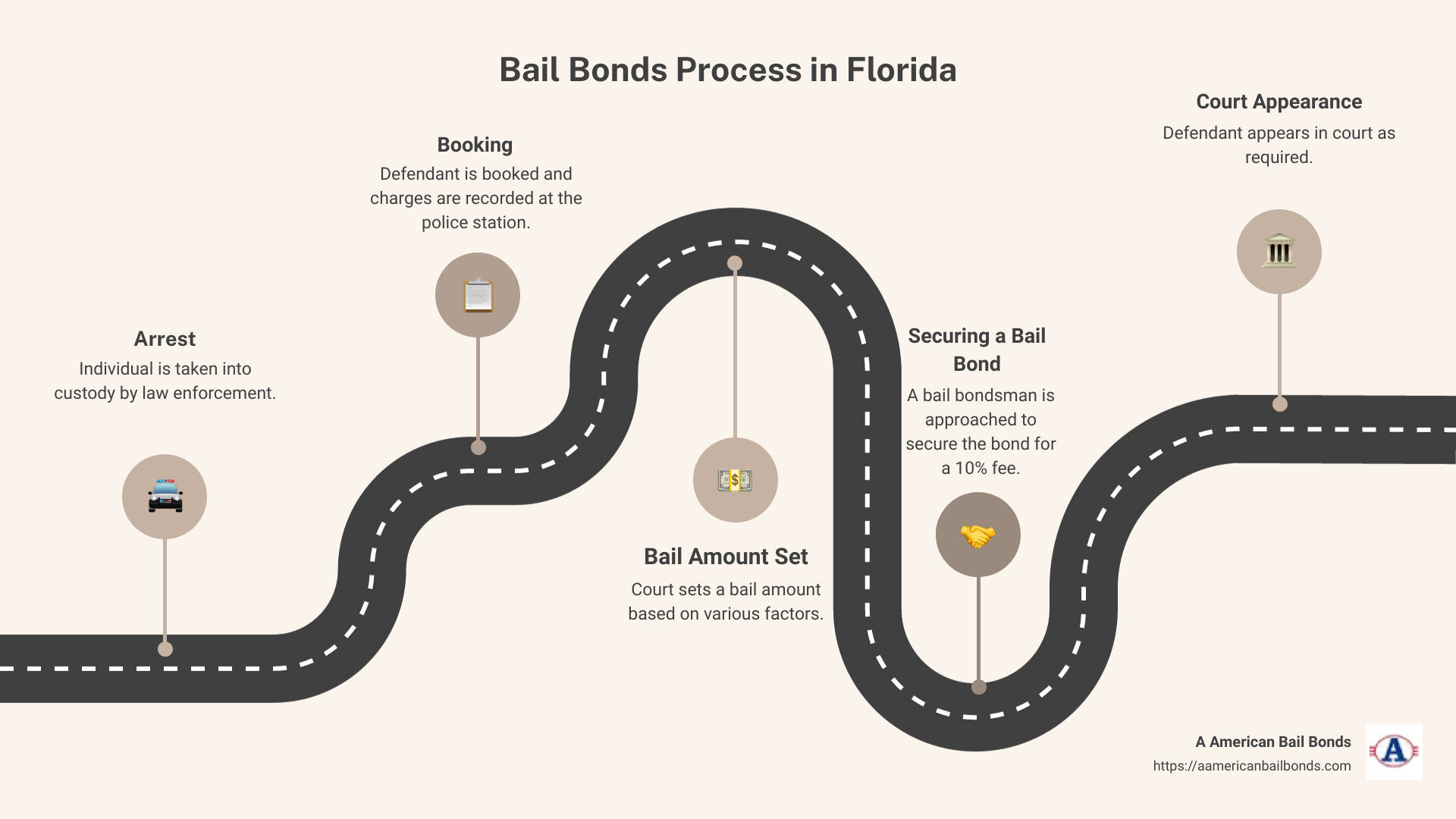
In Florida, bail is a set amount decided by the court to ensure that the defendant appears for all scheduled hearings. When the amount is unaffordable, a bail bond can be secured through a bail bondsman who charges a non-refundable fee, typically 10% of the bail amount, ensuring the defendant’s release.
My name is Luke Ireland, and with my 22 years of experience in law enforcement at the Atlantic County Prosecutor’s Office, I have extensive knowledge of the court systems. Here’s a breakdown of how bail bonds work in Florida, helping you steer this challenging time with clarity.
What is a Bail Bond?
A bail bond is a type of surety bond that acts as a guarantee by a third party that a defendant will appear at all their court proceedings. This bond allows the defendant to be released from court custody while awaiting trial.
Types of Bail Bonds
There are several types of bail bonds used in Florida, each serving different purposes:
Surety Bonds: The most common type, surety bonds involve a bail bondsman who guarantees the court that the defendant will meet their obligations. If the defendant fails to appear in court, the bondsman becomes responsible for paying the full bail amount. This type of bond is often used when the bail amount is too high for the defendant to pay upfront.
Cash Bonds: In some cases, the court may require the full bail amount to be paid in cash. If the defendant appears in court as scheduled, the money is returned at the conclusion of the case, regardless of the outcome. Cash bonds are straightforward but can be financially challenging for many people.
Property Bonds: In certain jurisdictions, defendants can use their property, such as real estate, as collateral for their release. If the defendant fails to appear, the court may seize the property to cover the bail amount. This option requires the defendant to have significant assets.
Federal Bonds: These bonds are used for federal cases and typically involve higher stakes and more stringent requirements. Federal bonds require a more rigorous assessment of the defendant’s flight risk and potential danger to the community.
In Florida, the bail bond process is a crucial part of the criminal justice system, providing defendants with the opportunity to secure their release and prepare for their defense. Understanding the different types of bail bonds can help you steer this complex process more effectively.

Next, we’ll explore the bail bond process in Florida, detailing the steps from arrest to court appearance and how a bail bond can facilitate your release.
The Bail Bond Process in Florida
How to Obtain a Bail Bond
When someone is arrested in Florida, they are taken to a local law enforcement station for booking. This involves fingerprinting, photographing, and collecting basic identification information. The arrestee is then placed in a holding cell until a judge sets the bail amount. This can take anywhere from a few hours to an entire night.
Once the bail amount is set, you have a few options:
- Pay the full bail amount in cash. This amount will be returned at the end of the case, minus any court fees.
- Use a bail bondsman. They will post the bail for you in exchange for a non-refundable fee, usually 10% of the bail amount. In Florida, this 10% fee is regulated by state law.
To obtain a bail bond, you will need to:
- Contact a bail bondsman. They are available 24/7 and can be reached by phone or online.
- Complete the paperwork. This includes signing a bail bond agreement and possibly providing collateral like property or a vehicle.
- Pay the 10% fee. This is non-refundable and is the cost of the bondsman’s service.
Once the paperwork is completed, the bail bondsman will post the bail with the court, and the defendant will be released.
Role of a Bail Bondsman
A bail bondsman plays a crucial role in ensuring that the defendant appears at all required court appearances. Here’s what they do:
- Tracking: The bondsman keeps track of the defendant to ensure they comply with all court requirements.
- Arrest Authority: If the defendant fails to appear in court, the bondsman has the authority to locate and return them to jail.
- Bond Forfeiture: If the defendant skips court, the bond is forfeited. The bondsman must then pay the full bail amount to the court.
- Indemnitor Responsibilities: The indemnitor (person who co-signs the bond) is responsible for ensuring the defendant appears in court. If the defendant fails to appear, the indemnitor may lose their collateral.
In Florida, bail bondsmen are regulated by the Florida Department of Insurance and must meet strict licensing requirements. They are not allowed to suggest specific attorneys or carry out legal functions in court.
Understanding the role of a bail bondsman and the process for obtaining a bail bond can help you steer the Florida criminal justice system more effectively.
Next, we’ll discuss the factors influencing bail amounts and how judges decide the appropriate bail for different cases.
Factors Influencing Bail Amounts
When someone is arrested in Florida, one of the first questions is often about bail: “How much will it be?” The amount of bail is not arbitrary. Several factors influence how judges decide the appropriate bail for each case. Let’s break down the main criteria.
Bail Amount Criteria
Crime Severity
The seriousness of the crime is a major factor. For instance, someone charged with armed robbery will face a higher bail amount than someone charged with shoplifting. In extreme cases, like murder or kidnapping, the judge may not set bail at all, keeping the accused in jail until trial.
Past Convictions
If the accused has a history of criminal activity, the bail amount will likely be higher. Judges look at the number of previous convictions, their seriousness, and how recently they occurred. A long criminal history suggests a higher risk, which translates to a higher bail.
Flight Risk
Judges consider whether the accused is likely to flee before the trial. Factors like owning a passport, having family or business ties in other countries, or past failures to appear in court can all suggest a higher flight risk. In such cases, bail will be set higher to discourage fleeing.
Community Ties
Ties to the community can lower the bail amount. Someone with a stable job, family, and a long-term residence in the area is less likely to flee. Judges may consider these factors as signs that the accused will appear in court when required.
Pre-Determined Criteria
Many Florida courts have standard bail amounts for common misdemeanors. These pre-determined amounts speed up the process but can be adjusted based on other factors.
Likelihood of Appearance
A history of appearing in court as required can work in the accused’s favor. If the person has a track record of showing up for court dates, the judge may set a lower bail.
Severity of the Crime
The more severe the crime, the higher the bail. This is to ensure that the accused has a strong incentive to return for trial. For example, drug trafficking charges will generally result in a higher bail than minor drug possession charges.
These factors are considered to ensure that bail serves its purpose: guaranteeing that the accused will appear in court while also protecting the community. Understanding these criteria can help you better steer the bail system in Florida.
Next, we’ll look at the costs and fees associated with bail bonds and what you can expect to pay.
Costs and Fees Associated with Bail Bonds
When dealing with bail bonds in Florida, understand the costs and fees involved. This section will break down the main expenses you can expect.
Premiums and Refunds
10% Fee: In Florida, bail bondsmen charge a non-refundable 10% fee of the total bail amount. This fee is mandated by the state and cannot be negotiated. For example, if the bail is set at $20,000, you will pay the bail bondsman $2,000.
Non-Refundable Premium: This 10% fee is the premium for the service of getting the accused released from jail. Once the defendant is out, this fee is fully earned by the bondsman and will not be refunded, even if the charges are dropped or the defendant is found not guilty.
Refund Conditions: The only scenario where you might get a refund is if the bondsman fails to fulfill their contractual obligations. In such cases, you may be entitled to some form of reimbursement.
Collateral Return: If you provided collateral (like a car title or property deed) to secure the bond, it will be returned to you once the case is closed and the bond is discharged. The bail bondsman has up to 21 days to return the collateral after receiving discharge papers from the court. If they fail to do so, you can send a certified demand letter to expedite the process.
Allowable Fees
Attorney Fees: While bail bondsmen cannot recommend specific attorneys, you may incur attorney fees if legal advice is sought during the bail process.
Transportation Costs: Some bail bondsmen may charge for transportation costs if they have to travel to meet you or the defendant. This is an additional fee and varies by agency.
Law Enforcement Costs: In some cases, there may be fees related to law enforcement activities, such as the cost of apprehending a defendant who has skipped bail.
Credit Card Fees: If you choose to pay the bail bond premium using a credit card, you may be subject to additional processing fees. These fees are usually a percentage of the total amount charged.
Understanding these costs and fees can help you make informed decisions when navigating the bail bond process in Florida. Next, we’ll explore the legal requirements for bail bondsmen in the state.
Legal Requirements for Bail Bondsmen in Florida
Becoming a Bail Bondsman
To become a bail bondsman in Florida, you must meet several legal requirements.
First, you need to be a United States citizen or a legal alien and at least 18 years old. You must also reside in Florida. Education is important too; you need a high school diploma or an equivalent.
Your criminal record matters. You cannot have been convicted of a felony, a crime of moral turpitude (like fraud), or any crime punishable by more than one year in prison.
Training is crucial. You must complete 120 hours of bail bondsman classroom instruction with a grade of 80% or higher. These classes must be from a provider approved by the Florida Department of Insurance. Additionally, you need to take a correspondence course on insurance and bonds.
After meeting these requirements, you must get a job with a licensed bail bond agent or insurance company. They will submit an affidavit attesting to your integrity and moral character along with your application for a temporary bail bond license. This temporary license is valid for up to 18 months. During this time, you must work at least 30 hours per week for 52 weeks before you can take the final exam and obtain a full bail bondsman license.
Restrictions and Prohibitions
Bail bondsmen in Florida must follow strict rules and guidelines.
Attorney Referrals: Bail bondsmen are not supposed to recommend specific attorneys. Although it happens, these recommendations are often based on relationships rather than the quality of the attorney. It’s better to choose your attorney based on a personal consultation.
Collateral Use: Collateral security collected by a bail bondsman cannot be used for personal benefit. It must be returned in the same condition as received. If the collateral is over $50,000 in cash, it must be payable to the insurer and held by them. For amounts over $5,000, the entire collateral must be forwarded to the insurer immediately.
Business Hours: Bail bond agencies must maintain reasonable business hours—at least eight hours daily between 8:00 a.m. and 6:00 p.m., Monday through Friday, except on legal holidays.
Weapons Policy: There are specific guidelines regarding the possession and use of weapons by bail bondsmen. It’s important to comply with these regulations to avoid legal issues.
These requirements ensure that bail bondsmen operate within the law and maintain high ethical standards while helping individuals steer the bail bond process in Florida.
Next, we’ll address some frequently asked questions about bail bonds in Florida.
Frequently Asked Questions about Bail Bonds in Florida
How does a bail bond work in Florida?
When someone is arrested in Florida, they can be released from jail before their trial by posting bail. Bail is a sum of money set by the court to ensure the accused will return for their court dates. If the accused can’t afford the full bail amount, they can use a bail bond.
A bail bond is a type of surety bond provided by a bail bondsman. The bondsman charges a non-refundable fee, usually 10% of the total bail amount, and guarantees the court that the accused will show up for all required court appearances. If the accused fails to appear, the bondsman is responsible for paying the full bail amount to the court.
How much is a bail bondsman in Florida?
The cost of hiring a bail bondsman in Florida typically involves a non-refundable fee of 10% of the total bail amount. For example, if the court sets bail at $10,000, the fee paid to the bondsman would be $1,000.
In some cases, the bondsman may also require collateral, such as property or a vehicle, to secure the bond. This collateral is returned once the case is resolved, provided the accused meets all court obligations.
How do I bond out of jail in Florida?
To bond out of jail in Florida, follow these steps:
Contact a Bail Bondsman: A friend or family member can reach out to a bail bondsman with the accused’s name, birth date, and the county where they are detained.
Provide Information and Payment: The bondsman will look up the case details and require a copy of the accused’s Florida driver’s license. The non-refundable fee (usually 10% of the bail amount) must be paid, and collateral may be required.
Complete Paperwork: The bondsman will fill out the necessary forms and submit them to the court. This process generally takes about 45 minutes.
Release from Jail: Once the paperwork is processed, the jail will release the accused. This can take up to five hours.
Court Obligations: The accused must attend all scheduled court dates. If they fail to appear, the bail bond may be forfeited, and the bondsman could seek to recover the full bail amount from the accused or their collateral.
These steps ensure that individuals can secure their release from jail while awaiting trial, allowing them to prepare their defense and continue their daily lives.
Conclusion
Navigating the legal system in Florida can be challenging, especially when it comes to understanding bail bonds. That’s where we come in. At A American Bail Bonds, we offer reliable and professional bail bond services across Brevard County.
Our team is dedicated to helping you and your loved ones get through this difficult time with ease. We provide a variety of bond types, including federal, state, county, and traffic bail bonds. Our expertise ensures a smooth bail process, from understanding the initial requirements to securing release and meeting court obligations.
Compliance is a key aspect of our service. We adhere to all Florida regulations to ensure that everything is handled legally and ethically. Our bail bondsmen are fully licensed and undergo continuous training to stay updated with the latest legal requirements.
Choosing a local business like A American Bail Bonds means you benefit from our in-depth knowledge of Brevard County’s legal system. We offer 24/7 support to address your concerns promptly and efficiently, ensuring that you can focus on what matters most—preparing your defense and getting back to your daily life.
For more information or to get started, visit our Palm Bay service page. We’re here to help you every step of the way.