Probation Violation: Can You Bail Out?
Can you bail out on a probation violation? The short answer is yes, in many cases, but it depends on specific circumstances and the court’s discretion. Here’s a quick summary of what you need to know:
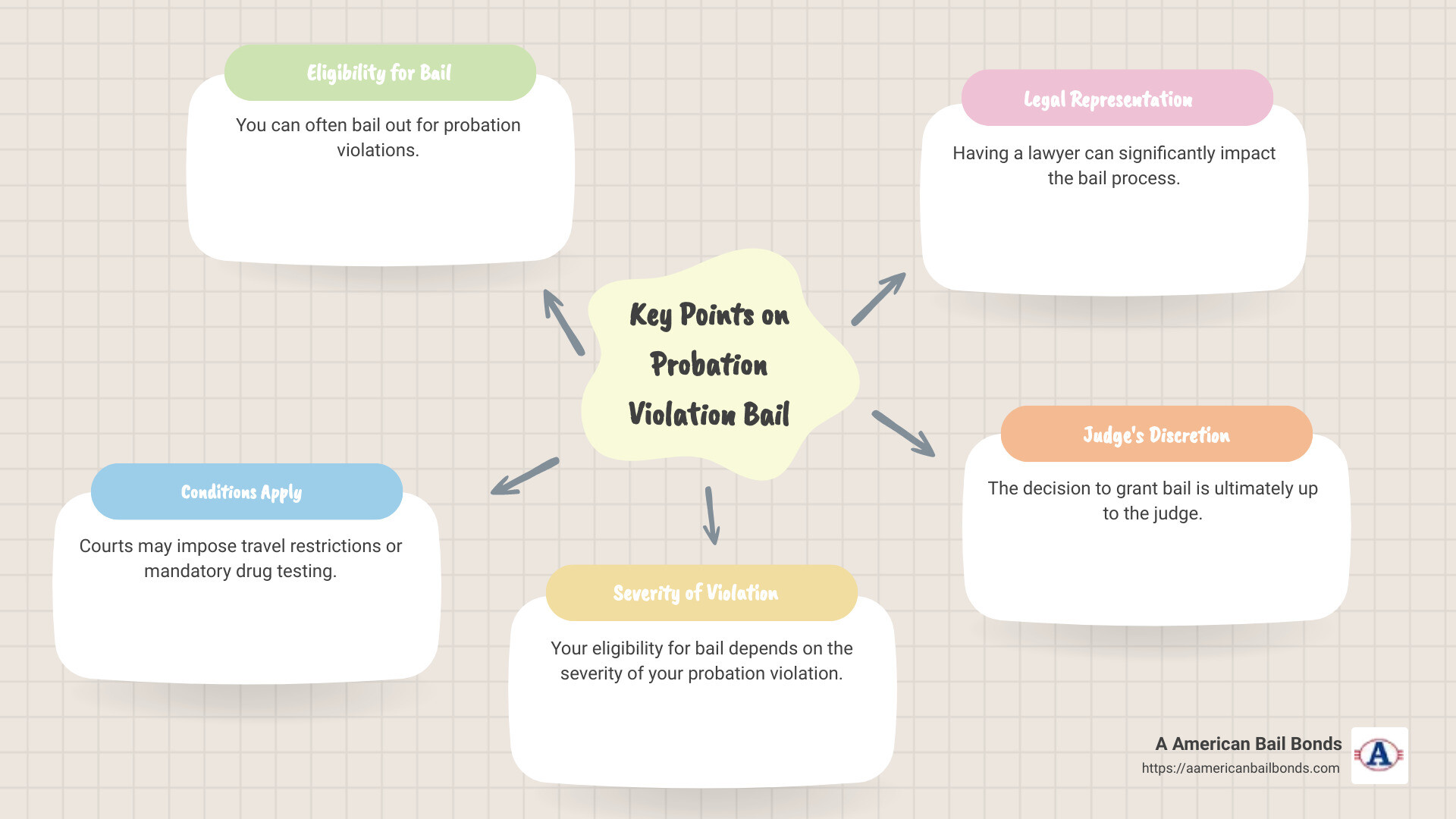
- Eligible for Bail: Often, you can bail out for probation violations.
- Conditions Apply: The court may set additional conditions such as travel restrictions or mandatory drug testing.
- Severity Matters: Depending on the severity of your violation, you might not be eligible for bail.
Dealing with a probation violation can be overwhelming. You might be faced with the fear of jail time, financial worries, and a confusing legal process. Understanding your options, like securing a bail bond, is crucial.
I’m Luke Ireland. With 22 years in law enforcement and extensive knowledge of the legal system, I’m here to help you steer the complexities of probation violations and bail bonds.
Let’s dive into what probation violations entail and how a bail bond can assist you.
Understanding Probation Violations
When you’re on probation, you’re given a set of rules to follow. Breaking any of these rules is called a probation violation. There are two main types of probation violations: technical and substantive.
Types of Probation Violations
Technical Violations: These are violations where you fail to meet the administrative requirements of your probation. Examples include missing a meeting with your probation officer, failing to pay fines, or not completing community service hours.
Substantive Violations: These occur when you commit a new crime while on probation. This is more severe than a technical violation. Examples include getting arrested for theft or being caught with illegal substances.

Consequences of Violating Probation
Violating probation can lead to serious consequences.
Arrest Warrant: If you violate your probation, a warrant for your arrest might be issued. This means the police can take you into custody at any time.
No Bond Status: For some violations, especially substantive ones, you might be held without bond. This means you cannot be released from jail until your hearing.
Maximum Sentence: If found guilty of violating your probation, you could face the maximum penalties for your original crime. For example, if you were on probation for a crime that carries a 5-year sentence, you could be ordered to serve those 5 years in jail.
New Offenses
Committing a new crime while on probation is the most serious type of probation violation. For instance, singer Chris Brown faced a probation violation hearing after being dismissed from a rehab facility and getting arrested for a new assault charge. The judge expressed concerns about his ability to stay out of trouble and ordered him held without bail.
This example highlights how new offenses can complicate your legal situation and lead to severe consequences.
Understanding these types of violations and their consequences can help you steer your probation terms more carefully and avoid potential pitfalls.
Next, let’s explore whether you can bail out on a probation violation and what factors influence such decisions.
Can You Bail Out on a Probation Violation?
When you violate probation, the big question is, “Can you bail out on a probation violation?” The answer depends on several factors, including the nature of your violation and the judge’s discretion.
Factors Influencing Bail Decisions
Misdemeanor vs. Felony: If your violation involves a misdemeanor, you have a better chance of being granted bail. Misdemeanors are seen as less severe compared to felonies. For example, a technical violation like missing a meeting with your probation officer is generally more leniently viewed than a new felony offense.
Nature of Violation: The type of violation matters a lot. Technical violations (e.g., failing to report a change of address) are more likely to result in bail than substantive violations (e.g., committing a new crime).
Probation Officer’s Recommendation: Your probation officer’s opinion can significantly impact the judge’s decision. If your probation officer believes you are a low risk, they might recommend bail, improving your chances.
Steps to Obtain Bail
Bond Motion: Your attorney will file a bond motion. This document requests that the court considers granting you bail. It’s the first step in the process and sets the stage for your bond hearing.
Bond Hearing: At the bond hearing, a judge will review your case. They will consider factors like your criminal history, the nature of your probation violation, and the probation officer’s recommendation.
Legal Representation: Having an experienced attorney is crucial. They will argue on your behalf, highlighting factors that support granting bail. For instance, if you have a stable job or strong community ties, your attorney can present these points to the judge.
Judge’s Discretion
The judge has the final say. They will weigh all the factors and decide whether to grant bail and what the bail amount should be. Judges consider:
- Severity of the Original Offense: More severe original offenses might lead to stricter bail conditions.
- History of Violations: If this is your first violation, you might be viewed more favorably.
- Community Safety: Judges will assess whether releasing you poses a risk to the community.
Navigating the process can be complex, but understanding these factors can help you and your attorney build a strong case for bail.
Next, let’s dig into the legal process for probation violation bonds and how to prepare for a bond hearing.
Legal Process for Probation Violation Bonds
Preparing for a Bond Hearing
When facing a bond hearing for a probation violation, preparation is key. Here’s what you need to know:
Documentation: Gather all relevant documents. This could include proof of employment, community service hours, payment receipts for fines, and any other evidence that shows compliance with probation terms.
Family Testimony: Family members can play a crucial role. Their testimony can highlight your good character and the support system you have in place. This can positively influence the judge’s decision.
Legal Strategy: Work closely with your attorney to develop a strong legal strategy. Your attorney will help present your case in the best possible light. They can also prepare you for the types of questions the judge might ask.
Possible Outcomes of a Bond Hearing
The judge’s decision at a bond hearing can vary. Here are the possible outcomes:
Release Without Bail: In some cases, the judge might decide to release you without setting bail. This is more likely if the violation is minor and you have a good track record.
Bail Hold: The judge might set a bail amount that you need to pay to be released. The amount can vary based on the severity of the violation and other factors.
Transport to Sentencing Court: In some situations, the judge might decide to transport you directly to the sentencing court. This usually happens if the violation is severe or if there are concerns about your compliance.
Understanding these outcomes can help you and your attorney prepare effectively for the bond hearing.
Next, we’ll cover frequently asked questions about bailing out on a probation violation.
Frequently Asked Questions about Bailing Out on a Probation Violation
How long do you go to jail for violating probation in Florida?
The length of jail time for violating probation in Florida can vary. The maximum penalty you might face depends on the original offense. For instance, if you were on probation for a felony, you could face up to the maximum sentence for that felony. On the other hand, for misdemeanors, the maximum could be up to one year.
However, the judge has discretion. They will consider factors like the nature of the violation, your criminal history, and any mitigating circumstances. Sometimes, the judge might not impose jail time and could opt for other penalties like extending probation or adding additional conditions.
Is there a bond for violation of probation in Florida?
There is no automatic bond for a probation violation in Florida. Whether you can post bond depends on the judge’s consideration. The judge will evaluate several factors before deciding to grant bail. These factors include the severity of the violation, whether it was a technical or substantive violation, and your overall compliance with probation terms.
If the judge decides to grant bail, you or your attorney will need to file a bond motion. This motion requests the court to set a bond amount, allowing you to be released until your hearing. That the judge’s decision is final, and they may deny bail based on the specifics of your case.
What happens if you violate probation in other states?
Violating probation in other states, like Massachusetts (MA) or Tennessee (TN), can lead to different consequences. Each state has its own laws and procedures for handling probation violations.
Massachusetts (MA): In MA, a probation violation could lead to a warrant for your arrest. The court will hold a hearing to determine if you violated probation terms. Depending on the outcome, you could face additional probation, jail time, or other penalties.
Tennessee (TN): In TN, similar to Florida, the judge has discretion. You might be held in jail until a hearing is scheduled. The judge will review your case and decide whether to revoke probation, extend it, or impose other penalties.
It’s crucial to consult with a local attorney who understands the specific laws and procedures in the state where the violation occurred. This ensures you get the best possible advice and representation for your situation.
This FAQ section aims to clarify common concerns about bailing out on a probation violation. Understanding these points can help you steer the complexities of the legal system more effectively.
probation violation bail bonds
When it comes to bailing out on a probation violation, the process can be complex and stressful. However, understanding your options and having the right support can make a significant difference. This is where we, at A American Bail Bonds, come into the picture.
A American Bail Bonds: Your Trusted Partner
At A American Bail Bonds, we specialize in helping individuals steer the bail process, especially in challenging situations like probation violations. Our experienced bail bondsmen are well-versed in the local laws and procedures, ensuring that you or your loved one can secure release as quickly and smoothly as possible.
Comprehensive Legal Assistance
We understand that facing a probation violation can be daunting. Our team is committed to providing not just bail bond services, but also the guidance and support you need throughout the legal process. From understanding the implications of your violation to advising you on the best course of action, we’re here to help every step of the way.
Securing Your Release
Securing a release from jail on a probation violation often involves multiple steps, including bond motions and hearings. With our expertise, we can help streamline this process. We work diligently to gather the necessary documentation, prepare for bond hearings, and present a strong case on your behalf. Our goal is to ensure that you have the best chance of being released while awaiting your probation hearing.
For more information on how we can assist you with probation violation bonds, visit our Probation Violations Bail Bond Services page.
Facing a probation violation can be overwhelming, but you don’t have to go through it alone. Reach out to A American Bail Bonds today, and let us help you secure the release and support you need.