Domestic Violence Bail Bonds: Costs, Process, and More
Domestic violence bail bonds are essential in navigating the legal system after an arrest for domestic violence in Texas. Here’s a quick overview of what you need to know:
- Definition: Domestic violence includes physical harm, bodily injury, assault, or sexual assault by a family or household member.
- Bail Bond: Typically ranges from $1,000 to $50,000, depending on the offense.
- Posting Bail: You can pay it in full or use a bail bond agent.
- Bail Conditions: May include no-contact orders and mandatory anger management classes.
Being arrested for domestic violence can be overwhelming. Knowing how bail works and what to expect can help ease the process.
I’m Luke Ireland, with over 22 years of experience in law enforcement and a deep understanding of the court system. I’m here to guide you through the ins and outs of domestic violence bail bonds.
Let’s dive into the details of this vital topic.
Understanding Domestic Violence Bail Bonds
What is Domestic Violence?
In Texas, domestic violence is defined as an act by a family or household member against another that aims to cause physical harm, bodily injury, assault, or sexual assault. It also includes threats of violence that can reasonably be expected to result in such actions. This definition extends to “dating” violence, which involves similar acts or threats against someone with whom the offender has a dating relationship.
Domestic violence can take many forms:
– Physical Abuse: Hitting, slapping, pushing, or any physical force.
– Sexual Abuse: Any non-consensual sexual act or behavior.
– Emotional Abuse: Insults, threats, humiliation, or manipulation.
– Psychological Abuse: Intimidation, stalking, or isolating the victim from friends and family.
– Economic Abuse: Controlling access to financial resources.
Why Bail is Required for Domestic Violence Cases
Bail serves as a financial guarantee that the accused will appear in court for all required proceedings. In domestic violence cases, bail is crucial for several reasons:
- Ensuring Court Appearance: Bail ensures that the accused will return for their court dates.
- Community Safety: Setting bail helps protect the community, especially the alleged victim, by imposing conditions on the accused’s release.
- Legal Process: Bail allows the accused to prepare their defense while out of custody, ensuring they can participate actively in their legal proceedings.
According to the Texas Code of Criminal Procedure, the court considers several factors when setting bail, including the severity of the crime, the potential risk to the community, and the accused’s criminal history.

In cases where bail is granted, it typically includes conditions like no-contact orders and mandatory anger management classes. These conditions aim to protect the victim and prevent further incidents.
Understanding the legal definitions and necessity of bail in domestic violence cases helps clarify why the process is so stringent and essential for community safety.
Next, we’ll explore the costs associated with domestic violence bail bonds and the factors influencing these amounts.
Costs of Domestic Violence Bail Bonds
Average Bail Amounts for Domestic Violence
Bail amounts for domestic violence charges can vary widely depending on the state and the specifics of the case. In general, misdemeanor domestic battery bail starts around $1,000. However, it quickly escalates based on severity and other factors.
For more severe cases, such as felonies or aggravated assault, bail can range from $10,000 to $50,000. In extreme cases, where there’s significant risk to the victim or community, bail may be set even higher or denied altogether.
Example Bail Amounts:
– Misdemeanor Domestic Battery: $1,000 – $5,000
– Felony Domestic Violence: $10,000 – $30,000
– Aggravated Assault in Domestic Dispute: $20,000 – $50,000
These amounts reflect the seriousness with which courts treat domestic violence cases, aiming to ensure the accused appears in court while protecting the victim and community.
Factors Influencing Bail Amounts
Several factors influence the bail amount set for domestic violence charges:
1. Crime Severity:
The more severe the crime, the higher the bail. For instance, a charge involving significant bodily harm will result in higher bail compared to a minor altercation.
2. Criminal History:
If the accused has a history of criminal activity, particularly related to domestic violence, the bail amount will likely be higher. A long criminal history suggests a higher risk of reoffending.
3. Victim Safety:
The court considers the potential risk to the victim. If there’s a high risk of further harm, the bail amount will be set higher to ensure the victim’s safety.
4. Flight Risk:
Judges assess the likelihood of the accused fleeing before the trial. Owning a passport, having ties in other countries, or a history of skipping court dates can lead to higher bail.
5. Community Ties:
Strong community ties, such as a stable job, family, and long-term residence, can lower the bail amount. These factors indicate that the accused is less likely to flee.
6. Evidence Against the Accused:
The strength of the evidence presented can also impact bail. Strong evidence may result in higher bail amounts to ensure the accused appears in court.
7. Severity of Injuries:
The extent of injuries sustained by the victim plays a crucial role. Severe injuries often lead to higher bail amounts due to the increased seriousness of the crime.
Understanding these factors can help you steer the bail process more effectively. It’s essential to be aware of how each element can impact the bail amount and the financial implications involved.
Next, we’ll look at the bail bond process for domestic violence cases and the steps involved.
The Bail Bond Process for Domestic Violence Cases
How to Post Bail for Domestic Violence
If you’re arrested for domestic violence, the process of posting bail can feel overwhelming. Here’s a simple breakdown:
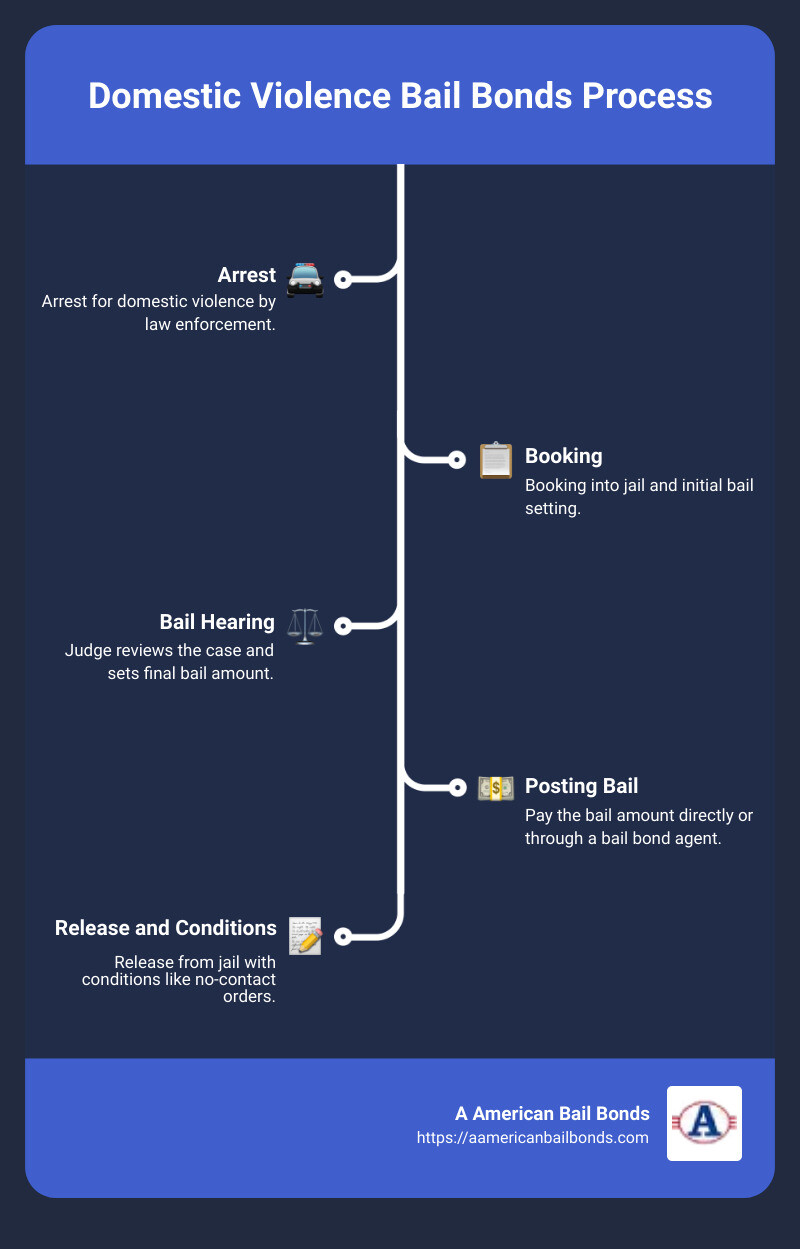
Arraignment: After arrest, you’ll be fingerprinted, photographed, and booked into jail. You’ll then appear before a judge for arraignment. This is when the judge will set your bail amount based on factors like the severity of the crime, any injuries, and your criminal history.
Bail Amount Set: The judge will set bail considering:
- Severity of the crime: More serious charges mean higher bail.
- Risk to the community: If you’re seen as a threat, bail could be higher or even denied.
- Evidence against you: Strong evidence may lead to higher bail.
Flight risk: If there’s a history of skipping bail, expect a higher amount.
Payment Options: Once bail is set, you have a few options:
- Pay in Full: You can pay the entire bail amount to the court. If you attend all court dates, this money is refunded.
- Bail Bond Agent: Most people use a bail bond agent, who charges a non-refundable fee (usually 8-15% of the bail amount) and posts bail on your behalf.
Wait in Jail: If you can’t pay, you’ll remain in jail until your court date.
Release: After bail is posted, you’ll be released from jail with conditions to follow until your court date.
Conditions of Bail for Domestic Violence
Posting bail is just the first step. You must follow specific conditions to stay out of jail:
No-Contact Orders: In many domestic violence cases, the judge issues a no-contact order. This means you can’t contact the alleged victim in any way. Violating this order can lead to immediate re-arrest.
Anger Management: You might be required to attend anger management classes, even if not court-mandated. Voluntarily doing this can show the court you’re taking the charges seriously.
Court Appearances: You must attend all scheduled court hearings. Missing a court date can result in your bail being revoked and a warrant issued for your arrest.
Avoiding Legal Trouble: Any new criminal activity can lead to bail revocation. Stay out of trouble to avoid further complications.
Supervised Visits: If you need to retrieve belongings from a shared home, police can supervise the visit to ensure compliance with no-contact orders.
Regular Check-ins: Some cases require regular check-ins with a bail officer or a pretrial services officer to ensure you’re following all conditions.
Adhering to these conditions is crucial. Violating them can land you back in jail, awaiting trial without bail.
Next, let’s discuss the legal considerations and your rights when dealing with domestic violence charges.
Legal Considerations and Rights
Building Your Defense
When facing domestic violence charges, it’s crucial to build a strong defense. Here are key steps to consider:
Hire an Experienced Attorney: A defense attorney who specializes in domestic violence cases can guide you through the legal maze. For example, Lisa Shapiro Strauss is a former County DA turned criminal defense attorney who understands both sides of the court.
Understand Your Legal Rights: Everyone is innocent until proven guilty. Knowing your rights can help you steer the legal system effectively. Your attorney will ensure that your rights are protected throughout the process.
Gather Evidence: Collect any evidence that supports your case. This can include text messages, emails, or witness testimonies. Your attorney will help you determine what is relevant.
Prepare for Court Hearings: Attend all scheduled court hearings. Missing a court date can lead to severe consequences, including revocation of bail. Your attorney will help you prepare for these hearings and advise you on what to expect.
Consider Defense Strategies: Depending on the circumstances, there may be various defense strategies available. These could include challenging the evidence, questioning the credibility of the accuser, or proving that the incident was an accident.
Complying with Bail Conditions
After posting bail, you must comply with all bail conditions to avoid further legal complications. Here’s what you need to know:
Abide by Court Orders: Follow all court orders, including no-contact orders and any restrictions on travel or activities. For example, if there’s a no-contact order, avoid any form of communication with the accuser.
Attend All Court Hearings: Missing a court date can result in your bail being revoked. Make sure you know the dates and times of all your hearings and attend them punctually.
Regular Check-ins: Some cases require regular check-ins with a bail officer or a pretrial services officer. These check-ins ensure you’re following all bail conditions.
Avoid Breaking Any Laws: Committing another crime while out on bail can lead to immediate re-arrest and a higher likelihood of being held without bail.
Seek Anger Management or Counseling: If not mandated by the court, voluntarily attending anger management classes or counseling can show the court that you are taking the charges seriously and are working to improve your behavior.
No Alcohol or Drug Use: Courts often impose strict prohibitions on the use of alcohol and drugs. You may be required to undergo random testing to ensure compliance.
Adhering to these conditions is crucial. Violating them can land you back in jail, awaiting trial without bail.
Next, let’s discuss frequently asked questions about domestic violence bail bonds.
Frequently Asked Questions about Domestic Violence Bail Bonds
How Much is Bail for Domestic Violence?
Bail amounts for domestic violence can vary widely based on several factors. Typically, misdemeanor domestic violence charges may start with bail set around $1,000. However, this can escalate quickly depending on the severity of the charges and the circumstances of the case. For more serious offenses, such as felony domestic violence or aggravated assault, bail can range from $10,000 to $50,000.
Factors Influencing Bail Amounts:
- Severity of the Crime: More severe crimes generally result in higher bail amounts.
- Injuries: If the alleged victim has sustained serious injuries, expect a higher bail.
- Risk to the Community: Judges will consider if the accused poses a potential risk to the community or the victim.
- Criminal History: A history of previous offenses can lead to higher bail or even denial of bail.
- Evidence: Strong evidence against the accused can also influence the bail amount.
In some cases, like in Texas, bail might be denied altogether, particularly if the accused is deemed a significant risk.
Can You Get a Bail Bond for Domestic Violence?
Yes, you can get a bail bond for domestic violence. A bail bond agent can help you post bail by putting up the money on your behalf. Here’s how it works:
- Contact a Bail Bond Agent: Find a reputable bail bond agent who is experienced in handling domestic violence cases.
- Pay a Fee: You’ll need to pay a non-refundable fee to the bail bond agent, typically 8-15% of the total bail amount.
- Sign a Contract: The bail bond agent will require you to sign a contract agreeing to appear in court as required.
- Release: Once the bail bond is posted, you will be released from jail to await your court date.
Payment Options:
- Cash Payment: You can pay the full bail amount in cash, which will be refunded if you comply with all court appearances.
- Collateral: Some bail bond agents may require collateral, such as property or valuables, to secure the bond.
- Payment Plans: Many bail bond agents offer payment plans to make the process more affordable.
What Happens After Posting Bail for Domestic Violence?
After posting bail, it’s crucial to comply with all bail conditions to avoid being returned to jail. Here’s what you need to do:
- Abide by Bail Conditions: Follow all court-imposed conditions, such as no-contact orders and attending scheduled therapy or counseling sessions.
- Build Your Defense: Work closely with a defense attorney experienced in domestic violence cases to build a strong defense.
- Attend All Court Hearings: Missing a court date can result in forfeiting your bail and a warrant for your arrest.
- Avoid Further Legal Trouble: Stay out of trouble and avoid any actions that could lead to additional charges.
- Retrieve Belongings Safely: If you need to retrieve belongings from a shared home, ask the police to supervise to ensure compliance with any no-contact orders.
Following these steps is essential to ensure you remain free on bail and can effectively prepare for your court case.
Next, let’s explore legal considerations and rights you need to be aware of when dealing with domestic violence charges.
Concluding Domestic Violence Bail Bonds
At A American Bail Bonds, we understand that dealing with domestic violence charges can be overwhelming. Our mission is to provide you with the support and legal assistance you need during this challenging time.
Our Bail Bond Services
We offer a range of bail bond services custom to meet your specific needs. Whether you’re dealing with a misdemeanor or a more severe charge, our experienced bail bond agents are here to help you steer the process smoothly.
Flexible Payment Plans: We believe financial constraints shouldn’t prevent you from accessing timely legal aid. Our flexible payment plans are designed to fit your unique financial situation, ensuring you can secure your release without added stress.
Expert Guidance: Our team is knowledgeable in the intricacies of domestic violence bail bonds. We provide clear, step-by-step guidance to help you understand your options and make informed decisions.
Legal Assistance
Beyond bail bonds, we emphasize the importance of securing proper legal representation. A skilled domestic violence attorney can make a significant difference in your case. They can help build a strong defense, ensure compliance with bail conditions, and represent you effectively in court.
We’re Here for You
We know the legal system can be complex and intimidating, but you don’t have to face it alone. At A American Bail Bonds, we’re committed to helping you through every step of the process.
Contact Us Today: If you or a loved one is facing domestic violence charges, don’t hesitate to reach out. We’re here 24/7 to provide the support and assistance you need.
When you’re ready, we’re here to listen and help you regain your freedom. Everyone deserves a fair chance to defend themselves and rebuild their lives.
For more information or to get started, contact us.
We hope this guide has provided valuable insights into domestic violence bail bonds and the steps you can take to steer this difficult situation. Stay informed, stay compliant, and seek the support you need to move forward.