Understanding DUI Bail Costs: Overview and Key Factors
How much is bail for a DUI? This question can cause a lot of anxiety for anyone facing a DUI charge. Bail amounts can vary significantly based on the severity of the offense and other factors:
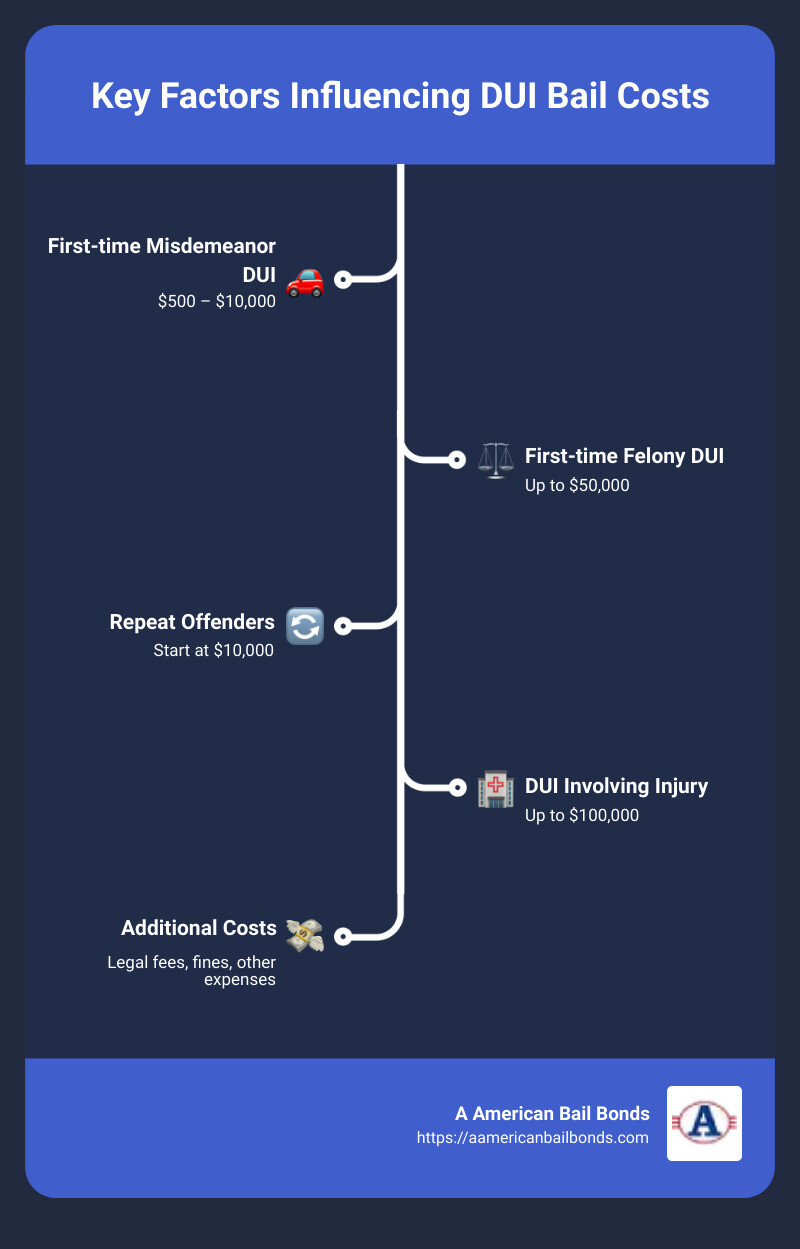
Key DUI Bail Amounts:
- First-time misdemeanor DUI: $500 – $10,000
- First-time felony DUI: Up to $50,000
- Repeat offenders: Start at $10,000
- DUI involving injury: Up to $100,000
Understanding DUI bail costs is crucial because it affects both your financial situation and your freedom. The costs are not limited to bail; they extend to legal fees, fines, and other expenses.
I’m Luke Ireland, a seasoned expert with over two decades in law enforcement. I’ve seen how understanding DUI bail costs can impact the accused and their families. Stick around as we dig deeper into this topic to help you steer this challenging period.
What is Bail and How Does it Work?
Bail is a financial guarantee that ensures a defendant will appear in court for all scheduled hearings and proceedings. When someone is arrested, they may be required to pay a set amount of money to secure their temporary release from custody. This money is known as bail.
Purpose of Bail
The primary purpose of bail is to:
- Ensure the defendant returns to court.
- Allow the defendant to remain free while awaiting trial.
- Reduce overcrowding in jails.
Bail acts as a promise that the defendant will attend all court dates. If they fail to show up, they forfeit the bail amount and may face additional legal consequences.
Financial Guarantee
When bail is set, the defendant has a few options:
- Cash Bail: The defendant or their family pays the full bail amount in cash. If the defendant attends all court dates, the money is refunded, regardless of the case outcome.
- Bail Bond: If the defendant cannot afford the full bail amount, they can work with a bail bondsman. The bondsman charges a non-refundable fee, usually around 10% of the total bail, to post the bail on behalf of the defendant.
- Property Bond: In some jurisdictions, a defendant can use property, like real estate, as collateral for their release. If they fail to appear in court, the court can seize the property.
Court Appearance
Once bail is posted, the defendant is released from custody. They must attend all scheduled court dates. Failure to appear can result in:
- Forfeiture of the bail amount.
- Issuance of a bench warrant for their arrest.
- Additional charges for failing to appear.

Understanding how much is bail for a DUI and the mechanics of the bail process can significantly impact your ability to steer the legal system effectively. In the next section, we’ll explore the specifics of DUI bail costs for first-time offenders.
How Much is Bail for a DUI?
Factors Influencing DUI Bail Amounts
Several factors influence how much bail will be set for a DUI charge. These include:
Criminal History: If the defendant has prior DUI convictions, the bail amount will be higher. For example, a second DUI offense can start at $10,000 and go up.
Severity of the Offense: The seriousness of the DUI incident plays a huge role. A misdemeanor DUI might range from $500 to $10,000, while a felony DUI can go up to $50,000 for a first offense.
Aggravating Factors: Certain conditions can increase the bail amount. These include:
- Child Endangerment: Having a child in the car can significantly raise the bail.
- Reckless Speed: Driving at dangerously high speeds.
- High Blood Alcohol Content (BAC): A BAC above 0.15% or 0.2% can lead to higher bail.
- Open Container: Having an open alcohol container in the vehicle.
- Evading Arrest: Trying to flee from law enforcement.
Hit and Run: Leaving the scene of an accident.
Local Bail Schedules: Each county has its own bail schedule, which sets the minimum bail amounts based on the charges. For example, a DUI in Los Angeles County may have a different bail amount compared to Riverside County.
Bail Amounts by State
Bail amounts can vary widely not just by county, but also by state. Here’s a quick look at some of the variations:
- California:
- First Offense: In Los Angeles County, the standard bail is $5,000. In Riverside County, it’s $3,500, while San Bernardino County sets it at $25,000.
Repeat Offenders: Bail amounts for repeat offenders start higher and can go up to $50,000 or more.
Texas:
- First Offense: Bail amounts generally range from $1,000 to $5,000.
Repeat Offenders: Bail can be significantly higher, often starting at $10,000.
Illinois:
- First Offense: Standard bail is usually around $2,500 to $5,000.
Repeat Offenders: Bail can increase significantly, especially if there are aggravating factors.
Florida:
- First Offense: Bail amounts typically range from $500 to $2,000.
Repeat Offenders: Higher bail amounts are common, often starting at $10,000.
Maryland:
- First Offense: Bail usually ranges from $500 to $5,000.
- Repeat Offenders: Bail can be much higher, especially if the offense involves aggravating factors.
Understanding these factors and regional differences can help you better steer the legal landscape if you or a loved one is facing a DUI charge.
In the next section, we’ll explore the specifics of DUI bail costs for first-time offenders.
DUI Bail Costs for First-Time Offenders
If you’re a first-time offender facing a DUI charge, you might be wondering how much is bail for a DUI and what additional costs you should expect. Let’s break it down.
Average Bail Amounts
For a first-time misdemeanor DUI, bail typically ranges from $500 to $10,000 depending on the state and specific circumstances. In some states, like California, the bail amount can be as low as $2,500 in Orange County but as high as $25,000 in San Bernardino County.
For a first-time felony DUI, which might involve aggravating factors like injury to another person, bail can go up to $50,000 or more.
Local Variations
Bail amounts can vary significantly by location. For example:
- Los Angeles County: $5,000
- Riverside County: $3,500
- San Bernardino County: $25,000
These variations depend on local bail schedules and specific court practices.
Additional Costs for First-Time Offenders
Beyond bail, there are several other costs you should be prepared for:
Towing Fees: If your vehicle is impounded, expect to pay towing and storage fees, which can add up quickly.
Insurance Rate Increase: A DUI conviction can cause your car insurance premiums to skyrocket. On average, premiums can double or even triple.
Legal Fees: Hiring an attorney to steer your DUI case can cost anywhere from $1,500 to $10,000 depending on the complexity of your case.
Fines: First-time DUI fines can range from $500 to $1,000. If your BAC was particularly high or if a minor was in the car, fines could be higher.
Alcohol Evaluation and Risk Reduction Classes: Many states require offenders to undergo an alcohol evaluation and attend risk reduction classes, which can cost several hundred dollars.
License Reinstatement Fees: After a DUI, your license may be suspended. Reinstating it involves additional fees, often around $150 to $250.
Ignition Interlock Device (IID): Some states mandate the installation of an IID, which prevents your car from starting if alcohol is detected on your breath. Installation and monthly maintenance fees can cost $70 to $150 per month.
Drug and Alcohol Screening: Regular screenings may be required as part of your bail conditions, costing around $30 to $60 per test.
Community Service Supervision: If community service is part of your sentence, there may be supervision fees involved.
Alternate Transportation: With a suspended license, you’ll need to rely on public transportation or rideshares, which can be costly over time.
Understanding these costs can help you prepare financially and avoid surprises. In the next section, we’ll dive into the higher bail amounts and additional costs faced by repeat offenders.
DUI Bail Costs for Repeat Offenders
If you find yourself facing a DUI charge again, the costs can escalate quickly. Repeat offenders encounter higher bail amounts and additional penalties. Let’s break it down.
Higher Bail Amounts
For a second DUI offense, bail typically starts at $10,000 and can go up. If you’re on probation, expect to pay between $25,000 and $50,000. A third offense or more can push bail amounts even higher. Courts view repeat offenders as a higher risk, both in terms of flight and public safety.
Aggravating Factors
Certain factors can increase your bail even more:
– Child Endangerment: Having a child in the car during a DUI can significantly raise bail.
– Reckless Speed: Driving at high speeds while intoxicated is another red flag.
– High Blood Alcohol Level: A BAC above 0.15% or 0.2% can lead to higher bail.
– Hit and Run or Evading Arrest: These actions show a disregard for the law and increase bail amounts.
Increased Fines
Repeat offenders also face steeper fines. A second DUI can bring fines up to $5,000, while a third offense may exceed $10,000. These fines are in addition to court costs and other fees.
Longer License Suspension
A second DUI often results in a longer license suspension, typically 1-2 years. A third offense could mean losing your license for up to 5 years or more.
Mandatory Treatment Programs
Courts may require mandatory treatment programs for repeat offenders. These can include:
– Alcohol Treatment Programs: Costs vary but expect to pay several hundred dollars.
– Ignition Interlock Device (IID): You may need to install an IID in your car, which can cost around $150 for installation and $60-$80 per month for maintenance.
Higher Insurance Rates
Insurance companies consider repeat offenders high-risk. Expect your insurance rates to skyrocket, sometimes doubling or tripling. Some insurers may even drop your coverage altogether.
Extended Use of Ignition Interlock Device
For repeat offenders, the court may require the IID for a longer period. This extended use can add up, costing you thousands over time.
Understanding these additional costs can help you prepare and steer the financial burden of multiple DUI offenses. Next, we’ll discuss how to post bail for a DUI and the role of a bail bondsman in this process.
How to Post Bail for a DUI
Working with a Bail Bondsman
Posting bail for a DUI can be a stressful and confusing process, but understanding your options can make it easier. Here are the main ways you can post bail:
1. Cash Bail
Paying the full bail amount in cash is the simplest option. If your bail is set at $5,000, you pay $5,000 to the court. Once you attend all required court appearances, the money is refunded minus any administrative fees. This option is straightforward but can be financially challenging.
2. Bail Bond Agents
Most people don’t have thousands of dollars on hand, so they turn to bail bond agents. A bail bondsman will post bail for you in exchange for a non-refundable fee, usually 10% of the total bail amount. For example, if your bail is set at $10,000, you pay the bail bondsman $1,000.
3. Property Bonds
In some cases, you can use property as collateral for bail. This involves placing a lien on your property, such as your home, equal to the bail amount. If you fail to appear in court, you risk losing your property.
4. Own Recognizance (OR) Release
Sometimes, the judge may release you on your own recognizance (OR). This means you don’t have to pay bail but must promise to attend all court appearances. Judges consider factors like your criminal history and ties to the community when deciding on OR release.
Bail Bondsman Fee
The fee for a bail bond is typically 10% of the total bail amount. This fee is non-refundable, even if you attend all court dates. For example, if your bail is $15,000, you pay the bail bondsman $1,500.
Collateral
In some cases, a bail bondsman may require collateral in addition to the fee. Collateral can be anything of value, such as jewelry, a car, or real estate. If you fail to appear in court, the bondsman can seize the collateral.
Conditions for Release
When you use a bail bondsman, you must meet certain conditions for release. These conditions often include regular check-ins with the bondsman and appearing at all court dates. Failure to meet these conditions can result in re-arrest.
A American Bail Bonds
At A American Bail Bonds, we understand that financial constraints shouldn’t keep you or your loved ones from timely legal aid. Our agents offer flexible payment plans custom to your unique financial situation. Whether you’re dealing with a first-time DUI or a repeat offense, we’re here to help you steer the bail process.
Next, we’ll answer some frequently asked questions about DUI bail, including specific information for states like California and Texas.
Frequently Asked Questions about DUI Bail
How much is bail for a DUI in California?
In California, the cost of bail for a DUI can vary widely based on several factors. For first-time offenders, bail is typically set between $5,000 to $10,000. However, for more severe cases like a felony DUI, the bail amount can soar to $100,000 or more.
Several factors influence the bail amount:
– Criminal history: Prior convictions can increase the bail amount.
– Severity of the offense: If there was an accident causing injury or death, the bail amount will be higher.
– Aggravating factors: These include extremely high BAC levels, speeding, or having a child in the car at the time of the arrest.
If you can’t afford to pay the full bail amount, a bail bond company can help. They typically charge a non-refundable fee of 8-10% of the total bail amount to post bail for you.
How much is bail for a DUI in Texas?
In Texas, the bail amount for a DUI also depends on various factors, similar to California. For first-time offenders, bail usually ranges from $500 to $2,000. If the DUI involves aggravating factors, such as causing injury or having a high BAC, the bail amount can be much higher.
Repeat offenders face steeper bail amounts. For example, a second DUI offense might result in bail set at $5,000 to $10,000, while a third offense could reach $15,000 or more.
Texas courts may also consider:
– The defendant’s flight risk.
– The danger the defendant poses to the community.
– Past criminal record.
What is an I bond DUI?
An I bond, or Individual bond, is a type of bail that allows the defendant to be released from custody without paying cash upfront. Instead, the defendant signs a written promise to appear in court on the scheduled dates. This is often referred to as being released on one’s own recognizance (OR).
In DUI cases, judges may grant an I bond if:
– The defendant is not considered a flight risk.
– The defendant does not pose a danger to the community.
This type of bond is beneficial as it eliminates the need for immediate cash payment, making it a more accessible option for those who qualify.
For more detailed information about DUI bail in your state or to get help with posting bail, contact A American Bail Bonds today. We’re here to assist you 24/7.
Next, we’ll dive into the specifics of how to post bail for a DUI and what to expect when working with a bail bondsman.
Final Thoughts on DUI Bail Costs
Understanding the costs associated with DUI bail is crucial for anyone facing these charges. Bail for a DUI can be expensive, and the amount varies based on factors like whether it’s a first-time offense or a repeat offense, as well as the severity of the incident.
For first-time offenders, bail amounts generally range from $500 to $10,000. This can increase significantly for repeat offenders or if there are aggravating factors like a high blood alcohol level or child endangerment. Additional costs, such as towing fees, legal fees, and increased insurance rates, can also add up quickly.
A American Bail Bonds is here to help you steer these complex situations. Our experienced bail bondsmen can provide the financial assistance you need to post bail and get back to your life while awaiting trial. We understand that a DUI charge is stressful, and we aim to make the bail process as smooth and hassle-free as possible.
Legal assistance is also essential. A qualified attorney can help you understand your rights, negotiate bail amounts, and represent you in court. If you’re facing a DUI charge, it’s important to seek both legal and financial help immediately.
For more information on how to post bail for a DUI or to get in touch with a bail bondsman, visit A American Bail Bonds. We’re available 24/7 to assist you through every step of the bail process.
Understanding DUI bail costs and knowing your options can make a significant difference in how you handle your case. Don’t let a DUI charge overwhelm you—take the necessary steps to secure your release and protect your future.